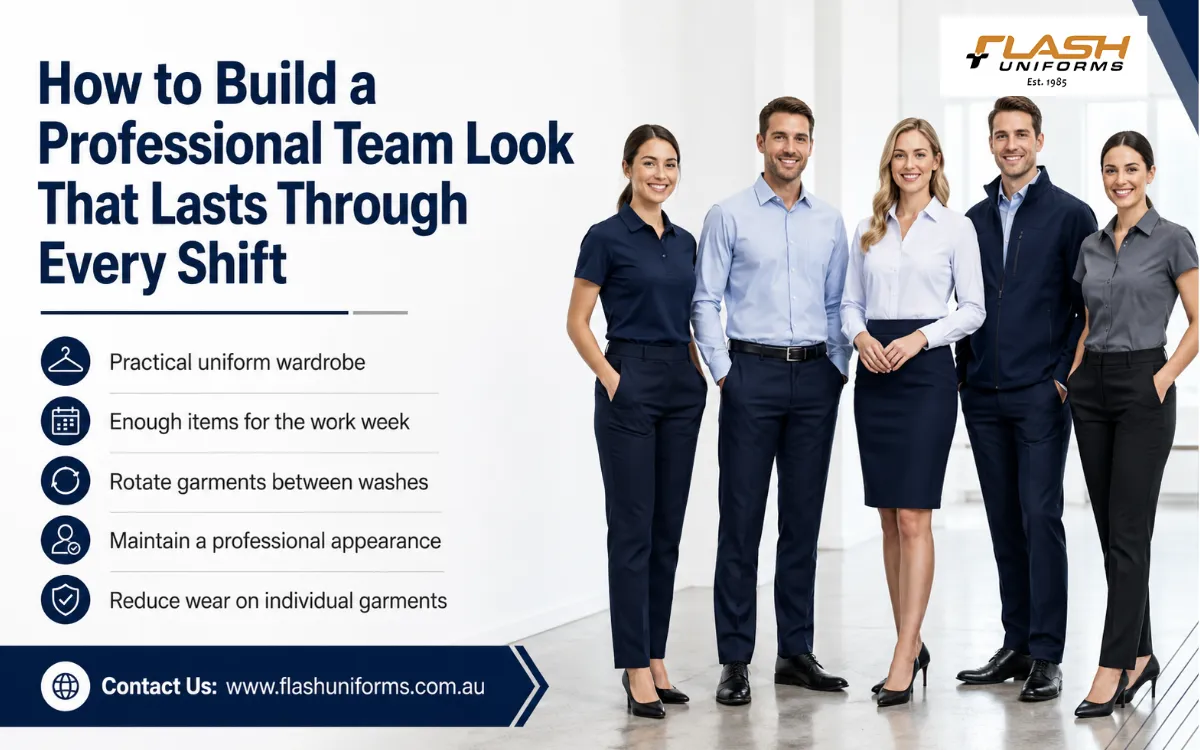
A professional team appearance is about much more than asking everyone to wear similar colours. The right work uniforms can help create a consistent business identity while giving employees practical clothing suited to their everyday responsibilities. Whether your team works in an office, showroom, warehouse, hospitality venue, healthcare setting or out in the field, what they wear can influence comfort, confidence and the way customers perceive the business.
For organisations with employees working long or physically demanding shifts, uniform decisions should balance appearance with practicality. Clothing that looks impressive when new but becomes uncomfortable, restrictive or difficult to maintain can quickly become a poor investment. A stronger approach is to build a coordinated wardrobe around durability, comfort, fit and consistent branding.
Start With the Daily Work Environment
Before selecting garments, think carefully about where and how employees actually work.
Someone who spends most of the day at a reception desk has different clothing requirements from an employee moving stock in a warehouse. Likewise, technicians travelling between job sites may need a different wardrobe from customer-facing sales staff.
Consider factors such as:
-
Indoor or outdoor working conditions
-
Level of physical movement required
-
Temperature changes throughout the day
-
Customer interaction
-
Workplace presentation standards
-
Storage or pocket requirements
-
Frequency of washing
-
Seasonal clothing needs
These practical considerations help prevent businesses from choosing clothing based purely on appearance.
Build Around a Consistent Visual Identity
Consistency is one of the strongest characteristics of a successful staff wardrobe.
Employees do not necessarily need to wear identical garments every day. Instead, businesses can establish a coordinated system using approved colours, garment styles and branding positions.
For example, a business might use navy trousers across the workforce while offering polos, button-up shirts and jackets in complementary colours. Different departments can have slightly different garments while still looking like part of the same organisation.
Keep Branding Simple
Logos and company colours should enhance the garment rather than overwhelm it.
A small embroidered logo on the chest can create a polished corporate look, while printed branding may work well for casual shirts, promotional clothing and larger team orders.
Businesses should also consider how branding appears when employees wear jackets, vests or additional layers. If outerwear regularly covers the logo underneath, branding the outer garment can maintain visibility.
Comfort Has a Direct Impact on Everyday Wear
Even the best-looking uniform will fail if employees dislike wearing it.
Comfort becomes particularly important during long shifts. Fabric weight, breathability, garment construction and freedom of movement can all influence the employee experience.
Look for clothing that allows workers to:
-
Bend and reach comfortably
-
Move without excessive restriction
-
Remain comfortable during temperature changes
-
Layer garments when required
-
Perform repetitive tasks without irritation
-
Maintain a neat appearance throughout the day
Gathering employee feedback before finalising a large order can also reveal practical issues that management may otherwise overlook.
Choose Garments Made for Repeated Use
Work clothing generally experiences more frequent washing and tougher conditions than ordinary casual clothing. For that reason, durability should be part of the purchasing decision from the beginning.
Teams that need coordinated corporate and service clothing can explore established ranges such as Biz Collection when building a consistent wardrobe across multiple roles.
Rather than selecting garments purely on initial purchase price, consider how often each item is likely to be worn and washed.
A slightly stronger garment that maintains its fit and appearance for longer can sometimes provide better overall value than repeatedly replacing lower-cost pieces.
Check the Details
Small construction features can make a significant difference.
When reviewing garments, pay attention to:
-
Stitching around high-stress areas
-
Collar construction
-
Button quality
-
Zip strength
-
Fabric recovery after stretching
-
Reinforcement around pockets
-
Colour consistency
-
Care instructions
These features are easy to overlook when ordering online but become important once clothing enters everyday rotation.
Create a Practical Uniform Wardrobe
One garment is rarely enough for an entire working week.
A practical staff wardrobe might include several shirts or polos, trousers or skirts, a jumper and an outer layer. Outdoor employees may need additional weather-specific garments.
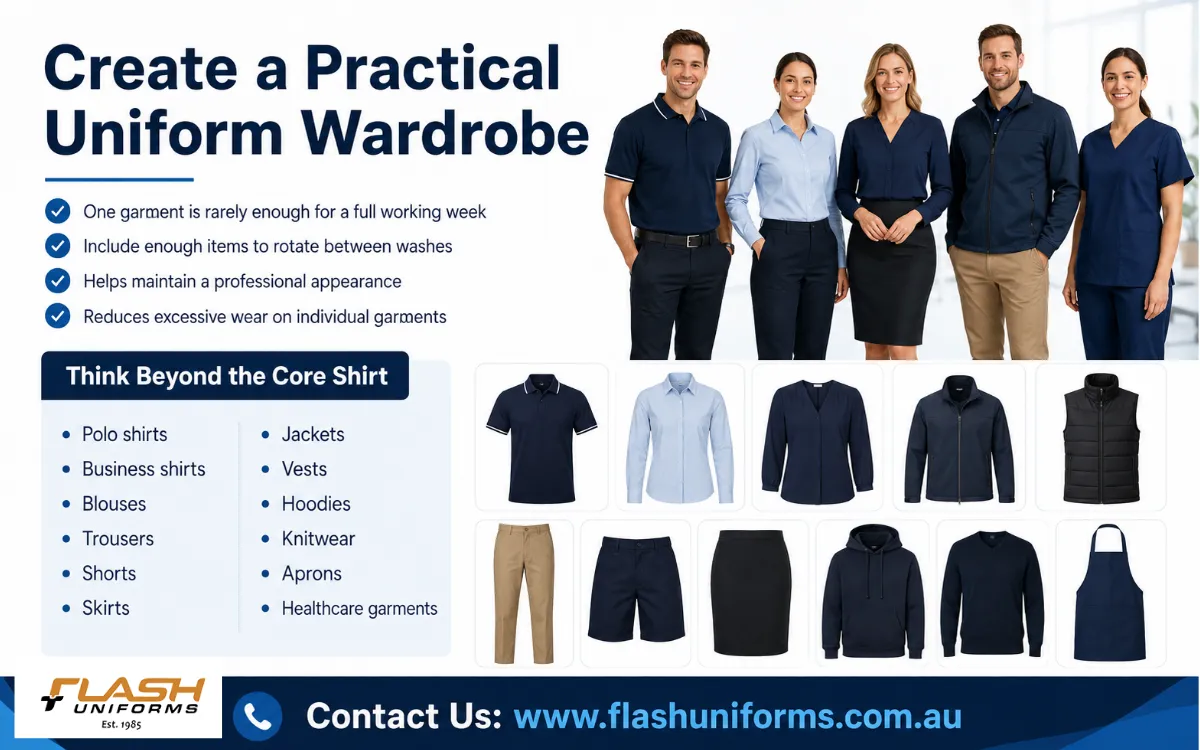
Providing employees with enough items to rotate between washing cycles helps maintain a professional appearance and reduces excessive wear on individual garments.
Think Beyond the Core Shirt
A coordinated program may include:
-
Polo shirts
-
Business shirts
-
Blouses
-
Trousers
-
Shorts
-
Skirts
-
Jackets
-
Vests
-
Hoodies
-
Knitwear
-
Aprons
-
Healthcare garments
The exact combination should reflect the workplace rather than following a one-size-fits-all formula.
Fit Matters Across the Entire Team
Modern workplaces include people with different body shapes, preferences and comfort requirements.
Offering appropriate sizing and fit options helps employees feel more confident and reduces the temptation to substitute personal clothing that does not match the company look.
When possible, businesses should avoid assuming that one cut or style will suit everybody.
Consider offering different fits while keeping the colour palette and branding consistent.
Make Seasonal Planning Part of the Strategy
Uniform planning should account for the full year.
A lightweight polo may be ideal during warmer months but inadequate during winter. Similarly, heavy outerwear may not be practical for employees moving frequently between indoor and outdoor environments.
Create a layered system where garments can work together.
For example:
Warmer Conditions
Employees may use:
-
Lightweight polos
-
Breathable shirts
-
Shorts where appropriate
-
Lightweight trousers
Cooler Conditions
Add:
-
Knitwear
-
Fleece garments
-
Hoodies
-
Softshell jackets
-
Vests
-
Weather-resistant outerwear
A layered approach allows employees to adapt throughout the day while maintaining a consistent appearance.
Consider the Customer’s Perspective
Customers often form an impression before an employee says anything.
Coordinated uniforms can make staff easier to identify and can contribute to an organised environment. This can be particularly useful in retail stores, hospitality businesses, events, service companies and facilities where customers need to quickly locate staff.
Professional clothing can also support consistency across multiple branches or teams.
When employees from different locations attend meetings, exhibitions or company events, coordinated clothing helps present the organisation as one unified brand.
Avoid Overcomplicating Your Program
A common mistake is creating too many colours, styles and exceptions.
This can make ordering, replacement and onboarding more difficult.
A simpler system is usually easier to manage.
Businesses might establish:
-
A primary colour palette
-
Two or three approved tops
-
Approved trousers or bottoms
-
Seasonal outerwear
-
Standard logo placement
-
Clear guidelines for different roles
Once this framework is established, future employees can be fitted into the same system without redesigning the entire wardrobe.
Plan for New Employees and Replacements
Uniform management does not stop after the first order.
Staff numbers change, garments wear out and new employees join the organisation.
Keep records of approved styles, colours and branding specifications so replacement orders remain consistent. Larger organisations may also benefit from maintaining standard uniform allocations for different positions.
This makes onboarding faster and reduces uncertainty when employees need replacement garments.
Why Choose Flash Uniforms?
Flash Uniforms helps Australian businesses bring together workplace clothing, recognised apparel brands and custom branding requirements in one place. Businesses can explore options for corporate teams, trades, safety-focused workplaces, hospitality, healthcare and other industries while selecting garments suited to different roles and conditions. With access to a broad product range and custom decoration possibilities, Flash Uniforms can support businesses seeking a more coordinated approach to staff presentation.
Final Thoughts
Building a professional team appearance requires more than selecting a shirt and adding a logo.
Successful work uniforms combine comfort, durability, fit, practical function and visual consistency. When each garment is selected around the realities of the workplace, employees are more likely to wear it comfortably and consistently.
Start by understanding the working environment, create a simple colour and style framework, choose garments designed for repeated use and plan for different seasons.
A well-structured uniform program can then become an everyday part of how your organisation presents itself—helping employees look coordinated from the beginning of a shift through to the end.